
News
The history of Tetenal
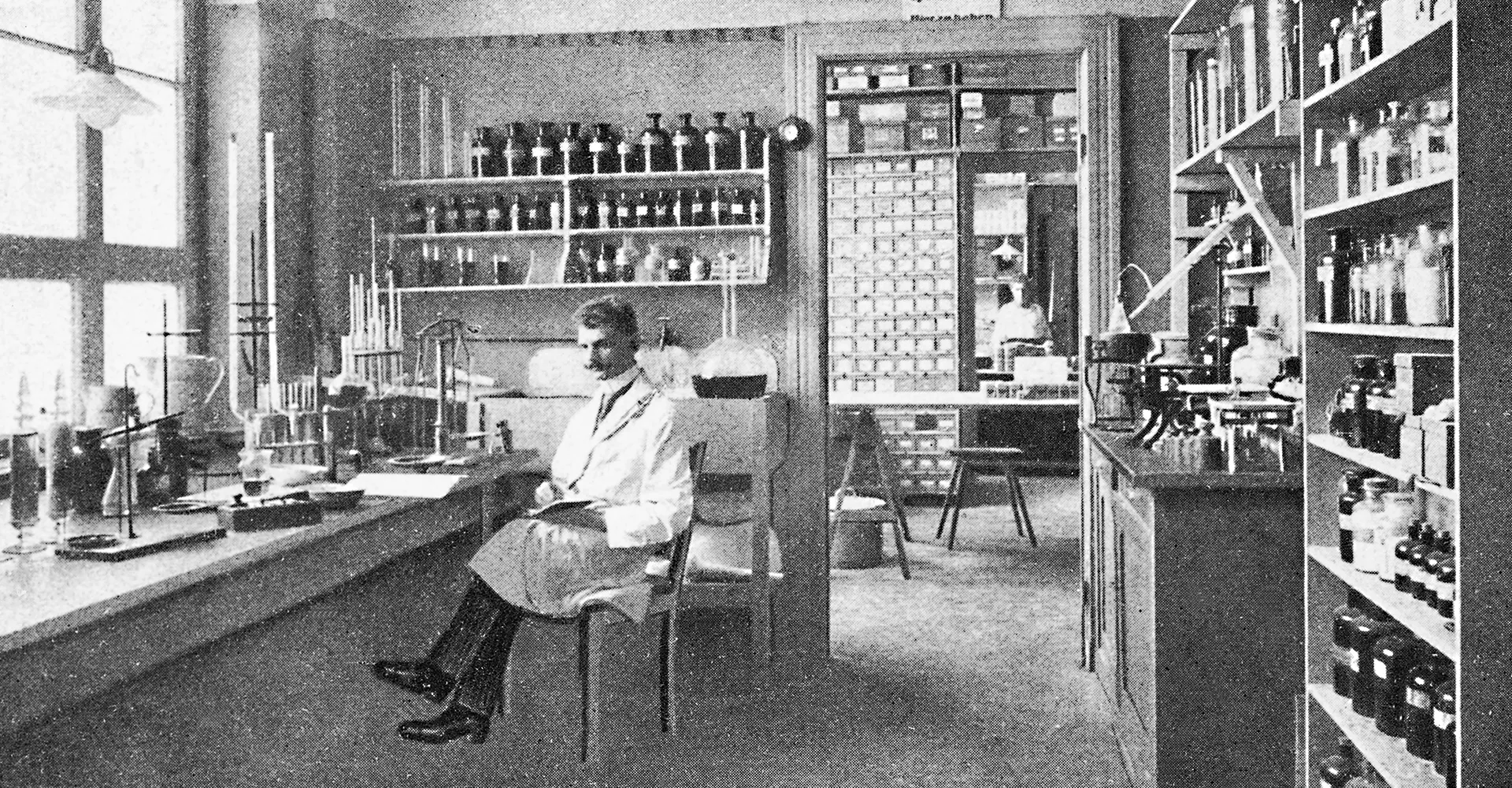
Many people who have developed a film in a bathroom turned darkroom, or run a minilab in a photo shop, know the TETENAL name. It appears on developer bottles, fixer containers and colour chemistry cartridges. Behind these labels is a company founded in Berlin in 1847, which lived through the arrival of colour photography, then digital, then several crises. This is its history, as we have been able to reconstruct it from our archives and from public sources.
1847: photographic products in a Berlin drug wholesaler
It starts with Theodor Teichgräber, a Berlin entrepreneur running a wholesale pharmaceutical business. In 1847 he adds photographic chemicals to his range. Photography is barely ten years old, and the first photographers prepare their own plates and baths: a wholesaler that knows chemistry is well placed to supply them.
The name came later. In 1910, the TETENAL trademark was registered for a concentrated developer, and the name was then extended to the whole company and its range. According to TETENAL France, it was inspired by the founder's name and by the well-known Rodinal developer.
In 1914 the business became a public limited company, Theodor Teichgraeber AG. It widened its field: in 1925 it offered chemicals for medical radiology. The company went bankrupt in 1926 and its business was taken over by a new entity. In 1962 came its first product for prepress, that is, the preparation of printing plates. Photography, medical imaging and the graphic arts became its three fields of activity. The company later moved its headquarters to Norderstedt, near Hamburg.
Neofin and Superfix, two darkroom names
For black and white photographers, two products sum up the brand.
Neofin is a developer for negative films. Its Neofin Blau ("blue") version builds on the work of Willi Beutler, the German photographer and chemist who set out the theory of high-acutance developers. It works as a compensating developer: highly diluted, it exhausts quickly in the highlights and keeps working in the shadows. The negative keeps detail at both ends, with crisp edges. In 1960 the British magazine Practical Photography recommended it to get the best out of very thin-emulsion films. It was then sold in the United Kingdom in boxes of five 30 ml ampoules.
Neofin Blau is a single-use developer: you dilute a bottle just before developing, then discard the solution. Each film gets fresh chemistry, and the photographer does not have to manage the exhaustion of a reused developer.
Superfix is the brand's fixer. According to the brand's own description, the name has been associated with fixing black and white films and papers for decades, and the formula has been regularly adapted to the materials available. In 2021, TETENAL presented Parvofin developer and Superfix fixer in tablet form. This solid format extends older know-how: as early as 2000, G-Chem technology made it possible to produce processing chemistry as granules, tablets or pearls, and the ecojet tablet system for Konica Minolta digital labs dates from 2006.
Colour, minilabs and safer chemistry
Photo labs changed a great deal between the 1980s and 2000s, and the range followed.
- In 1982, launch of TT-Speed, presented by the company as the first black and white photographic paper on a PE (plastic-coated) base.
- In 1987, an E-6 three-bath process simplified the development of colour reversal films, used for slides.
- In 1992, the "safe chem" research programme produced products that were safer for operators and the environment, such as formaldehyde-free stabilising baths. It also brought minilab processes (C-41 and RA-4) with very low replenishment rates, meaning they use less fresh chemistry for the same volume processed.
- In 1998, the Ergoline range for minilabs and the professional Colortec line arrived, with odourless, reduced-allergy formulas.
In medical imaging, the company also launched Roentoroll RA, the first specialist developer for mammography, and Roentoroll AC, an X-ray developer free of hydroquinone and glutaraldehyde. From 1996, the Spectra Jet brand also took it into inkjet printing, alongside chemistry.
The French subsidiary was founded in 1985 and set up in Monéteau, near Auxerre, from where it still distributes products for photography and printing.
2018-2019: insolvency, then an employee buyout
In autumn 2018, Tetenal Europe GmbH applied for restructuring under insolvency protection. No investor was found, and the closure was announced at the end of January 2019, after 172 years. The photo press saw it as the loss of a major supplier for black and white as well as for the C-41, E-6 and RA-4 colour processes.
An employee initiative then offered to take over the formulas, the brand and the production equipment. The insolvency administrator accepted the offer in February 2019, and the new company, TETENAL 1847 GmbH, started trading on 1 April 2019 in Norderstedt.
Unfortunately, this relaunch did not deliver the expected results.
2023-2025: the PIP group brings the brand together
The PIP group, owner of Tetenal's French subsidiary, first strengthened its position in France by acquiring MB Tech in 2023. Then, in 2025, it acquired the entire TETENAL brand and rights.
The brand, its rights and the French subsidiary now belong to the same group.
2026: what is being prepared
In 2026, new projects are being built behind the scenes for the worldwide renewal of the brand. The site you are reading symbolises this coming renewal.
See you in 2027 to discover these projects. Until then, you can write to the team from the contact page.